


Recovered Functions: Experimental Structures from Timber Waste.
Working with timber waste from the construction industry, students investigate material flows and test circular strategies through hands-on material experimentation. Each team develops a small-scale architectural structure that reinterprets a core function of a tree, exploring how discarded resources can be reintegrated into the built environment.
Agnes Arumetsa and Finn Jesewski, 2026
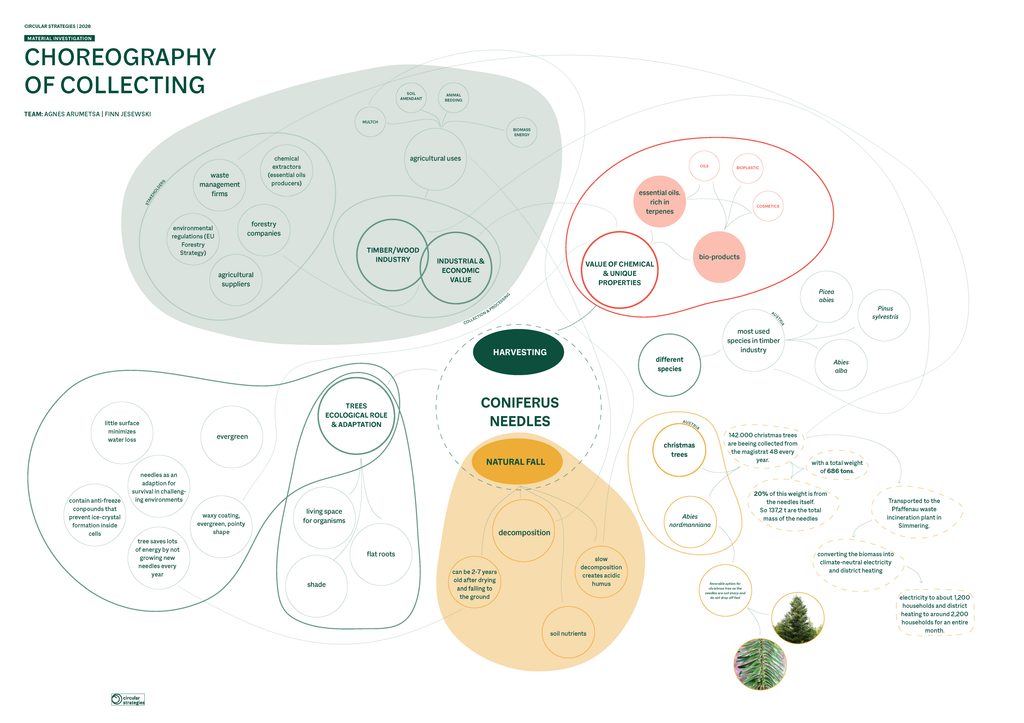
In the weeks following Christmas, citizens of Vienna say farewell to their Christmas trees. Once the cherished centerpieces of festive homes, the trees are gathered at 596 dedicated collection points across the city, where they sit in sombre piles in squares and parks. In January, MA48 takes the trees to the Pfaffenau waste incineration plant in Simmering, where they are burned as a source of energy. To make this supply-chain visible we curate the festive waste mass. Our project seeks to raise awareness of the connection between consumtion and energy by reimagining this practice. Before the trees are taken away for thermal recycling, we propose prolonging their presence at the collection points and transforming them into a living community installation. Specifically, we are relocating one collection point to the closeby Leon Zelman public park grassland area, located in the new development area of Village Im Dritten in Vienna’s 3rd district. This serves as testing ground because of its nearby infrastructure, and the odd location of the previous collection point.
We are curating the performative act of collection in the month of January by designing the shape of the piles of trees collected. The project suggests assembling the trees joined to each other, creating an aromatic, temporary shelter-installation. As the collection is placed in an open park area, the length of the tunnel is not fixed and can therefore be shorter or longer depending on the number of trees citizens bring. As the needles fall off the trees bit by bit, these installations offer citizens a unique shelter with a changing spatial quality. The location of the project has been chosen to have a social and educational impact on the students of the neighboring Aron Menczer primary school and kindergarten. In addition to these educational institutions in the immediate vicinity, Village Im Dritten is a newly developed area hosting both residential and commercial use, meaning the installation will be seen, visited, and experienced by many. Once the trees have naturally dried at the dedicated location, the already fallen needles (and the ones collected by lightly shaking the tree) are gathered together with the youth. This action introduces them to the potential of natural materials, like pine needles, while encouraging creativity, sustainability, and a deeper respect for nature.
On a practical and ecological level the circular material care practice ensures that material which is usually considered waste from the holiday season continues to support the city’s living landscape. The needles of the Nordmann fir (Abies nordmanniana) can be distributed as a substrate for nearby plant beds, providing vital organic mulch that suppresses weeds, regulates soil temperature, and slowly releases nutrients back into the earth. This local reuse also reduces transportation and ready-made substrate costs for the neighborhood. With the arrival of spring in the beginning of March, the shelter will find its end. Embracing the seasonal change of the cityscape, the holiday-reminiscent shelter will be disassembled together with the pupils, giving them a chance to get in touch with the material – feeling the brittle needles, smelling their crisp resin and hearing the crunch of the branches. Afterward, the pupils will help to distribute the needles on plant beds and transport the leftover Christmas trees to the Pfaffenau incineration plant. This final action will give them the opportunity to visit the waste center and, therefore, positively influence their attitudes towards waste.