


Global standards, individual processes
The Third Circular Strategies Symposium discusses the universal and the individual. Are there (new) standards that apply globally, or should universal ideas be overcome altogether in favor of local engagement?
7/10/2022, 10:30 – 17:30 (CET)
Auditorium of the University of Applied Arts Vienna Vordere Zollamtsstraße 7, 1030 Vienna
Ecosystems collapse, resources are becoming scarce and there is urgent need for action to counteract these developments. Architecture plays a vital role in shaping our relationship with the world, bearing a significant responsibility but also offering a promising opportunity for change. But where should we focus our attention and which steps could we take now?
This year the Circular Strategies Symposium discusses the universal and the individual. Are there (new) standards that apply globally, or should universal ideas be overcome altogether in favor of local engagement?
Programme:
10:00 Admission
10:30 Intro
Welcome Address: Gerald Bast, Rector of the University of Applied Arts Vienna
Introduction: Karin Raith and Lukas Allner, Institute of Architecture, University of Applied Arts Vienna
11:00–11:50 Urgent action!
Given the critical environmental impacts of construction processes, which of the many approaches, ranging from materials recycling to planning for flexibility, should take precedence?
Keynote lecture: Susanne Kytzia, Eastern Switzerland University of Applied Sciences, Rapperswil: “How can future construction reduce our dependence on primary resources and fossil fuels?”
Response: Willi Haas, Institute of Social Ecology, University of Natural Resources and Life Sciences Vienna (BOKU)
Q&A
12:00–13:00 Dialog with the existing
The reactivation of material stocks is an essential task for a futureoriented building culture. With a view to the European context, two positions on architecture enter into a dialog.
Christoph Müller | baubüro in situ / zirkular, Zurich & Basel, Switzerland: “Catch of the day – building with the existing”
Inge Vinck & Jan de Vylder | A JDVIV / IVJDV A + ETC, Ghent, Belgium: “RE-THINKING RE”
Speakers in conversation/Q&A
13:00–14:00 Lunch break
14:00–14:50 Systemic change and individual approaches
Speakers from science and architecture share their views on how established systems could be changed for a better future.
Jeroen van den Bergh, Universitat Autònoma de Barcelona & Vrije Universiteit Amsterdam: “Agrowth, architecture, circularity, and climate”
DK Osseo-Asare & Ryan Bollom I LowDO, Austin, Texas and Tema, Ghana: “Humanitarian design & material (re)volution”
Søren Nielsen I Vandkunsten, Copenhagen, Denmark: “The new architectural aesthetics of circularity”
Susanne Witzgall I Akademie der Bildenden Künste München, Germany: „One doesn’t fit all. A critical neomaterialist approach to standardization”
15:00–15:50 Panel discussion
When and how do (international) standards help to create changeable environments, and which circumstances require individual proposals?
With Jeroen van den Bergh, DK Osseo-Asare & Ryan Bollom, Søren Nielsen, Susanne Witzgall
Discussion moderated by Lukas Allner
Q&A
16:00–16:50 Accelerated reverse engineering
Why architecture and the building industry – whether global or local – need to think in reverse and what it takes to speed up this process?
Keynote lecture: Hanif Kara, Harvard Graduate School of Design: “Technological obsolescence could be healed by accelerated reverse engineering”
Response: Baerbel Mueller, Institute of Architecture, University of Applied Arts Vienna
17:00–17:30 Wrap up
by Karin Raith, Lukas Allner, Doris Österreicher
Event held in English
Organization and curation: Karin Raith and Lukas Allner, Institute of Architecture, University of Applied Arts Vienna
Moderation: Doris Österreicher, University of Natural Resources and Life Sciences Vienna (BOKU)

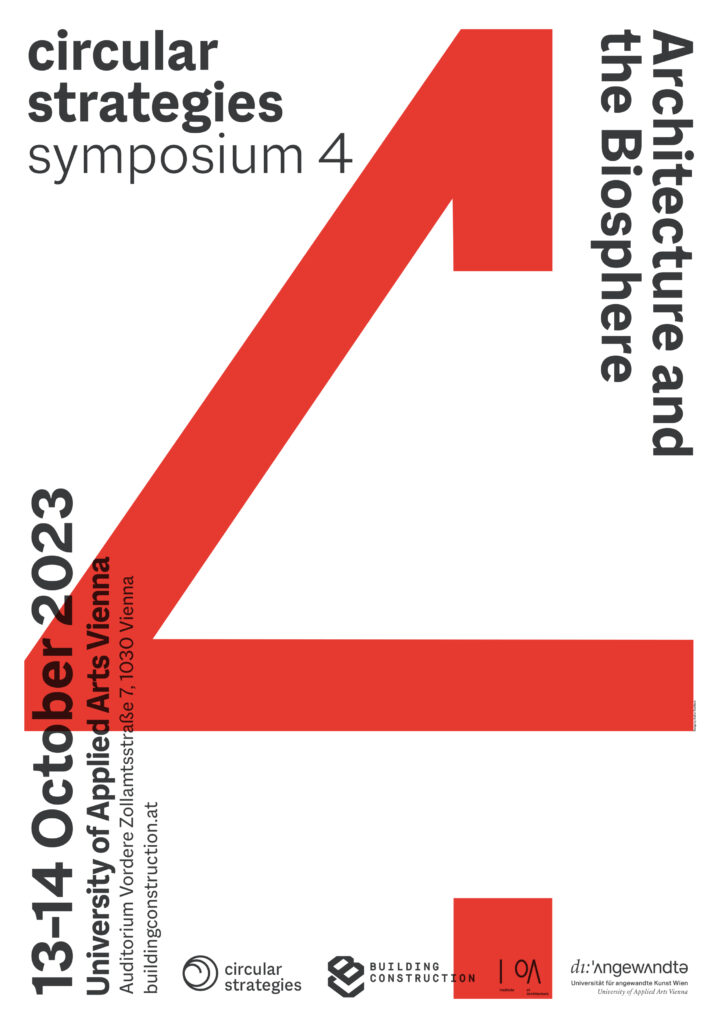
Architecture and the Biosphere
The Fourth Circular Strategies Symposium addresses the integration of the biosphere into the technosphere of architecture and the city: overcoming the climate crisis and creating an environment worth living in.
13/10/2023 + 14/10/2023
Auditorium of the University of Applied Arts Vienna Vordere Zollamtsstraße 7, 1030 Vienna
How can the integration of the biosphere into the technosphere of architecture or the city contribute to overcoming the climate crisis and creating an environment worth living in? We want to shed light on three aspects, material, ecosystems, and transformation, each addressed in a lecture block with a subsequent panel discussion.
Alongside the event, there will also be an exhibition of student works that reflect on topics related to Circular Strategies.
Friday 13/10/2023
15:00 Admission
15:30
Welcome Address: Petra Schaper Rinkel, Rector of the University of Applied Arts Vienna
Introduction by Lukas Allner, Institute of Architecture, University of Applied Arts Vienna
MATERIAL
What opportunities do nature-based building materials offer in terms of recarbonization, resource conservation, and the creation of healthy living spaces? What is their design potential – What are their limits?
15:45 -16:45 WOOD
Keynote: Yves Weinand, IBOIS Lab, École Polytechnique Fédérale de Lausanne, Switzerland
Thomas Mennel, architect and researcher, Schwarzenberg, Austria
16:45-17:00 break
17:00 -18:00 NATURAL AND NATURE-BASED MATERIAL, MATERIAL EXPERIMENTATION
Petra Gruber, Institute of Architecture, University of Applied Arts Vienna
Ken de Cooman, BC architects & studies & materials, Brussels, Belgium
18:00-19:00
Panel discussion with the 4 speakers of the session block “Material” moderated by Christoph Kaltenbrunner, Institute of Art Sciences and Art Education, University of Applied Arts Vienna
Saturday 14/10/2023
ECOSYSTEMS
How can we integrate living organisms into buildings and cities? What do they do to mitigate climate change on the one hand and for adapting to its effects on the other? What do they mean for human recreation and biodiversity?
10:00 -10:50 BUILDINGS AS BIOTOPS
Pascale Dalix, ChartierDalix Architectes, Paris, France
Doan Thanh Ha, HPA architects, Hanoi, Vietnam
11:00 – 11:50 DESIGN WITH NATURE
Louise Fiil Hansen, SLA Architects, Copenhagen, Denmark
Marialuisa Borja, Al Borde, Quito, Ecuador
12:00 – 13:00
Panel discussion with the 4 speakers of the session block “Ecosystems”, moderated by Tülay Atak, Institute of Architecture, University of Applied Arts Vienna
13:00-14:00 Lunch break
TRANSFORMATION
Buildings and cities are ecosystems that change over time. Following nature’s example – What processes do we need to initiate and foster to keep the environment adaptable and vibrant?
14:00 – 15:00 NEIGHBOURHOOD REGENERATION, SMALL INTERVENTIONS
Yuma Shinohara, curator at S AM Swiss Architecture Museum, Basel, Switzerland
Oana Stancioiu, nonconform, Vienna, Austria
15:00 – 16:00 CITY REMEDIATION, NEW ECOLOGIES
Rikke Juul Gram, Schønherr landscape architecture, Copenhagen
Susann Ahn & Thomas Hauck, landscape architecture/animal aided design, Freising and Vienna, TU Vienna, Austria
16:00 – 17:00
Panel discussion with the 4 speakers of the session block “Transformation” moderated by Robert Korab, Raum & Kommunikation, and TU Vienna, Austria
17:00 Closing words
Organized and curated by Karin Raith and Lukas Allner, University of Applied Arts Vienna, moderated by Doris Österreicher, University of Natural Resources and Life Sciences, Vienna.
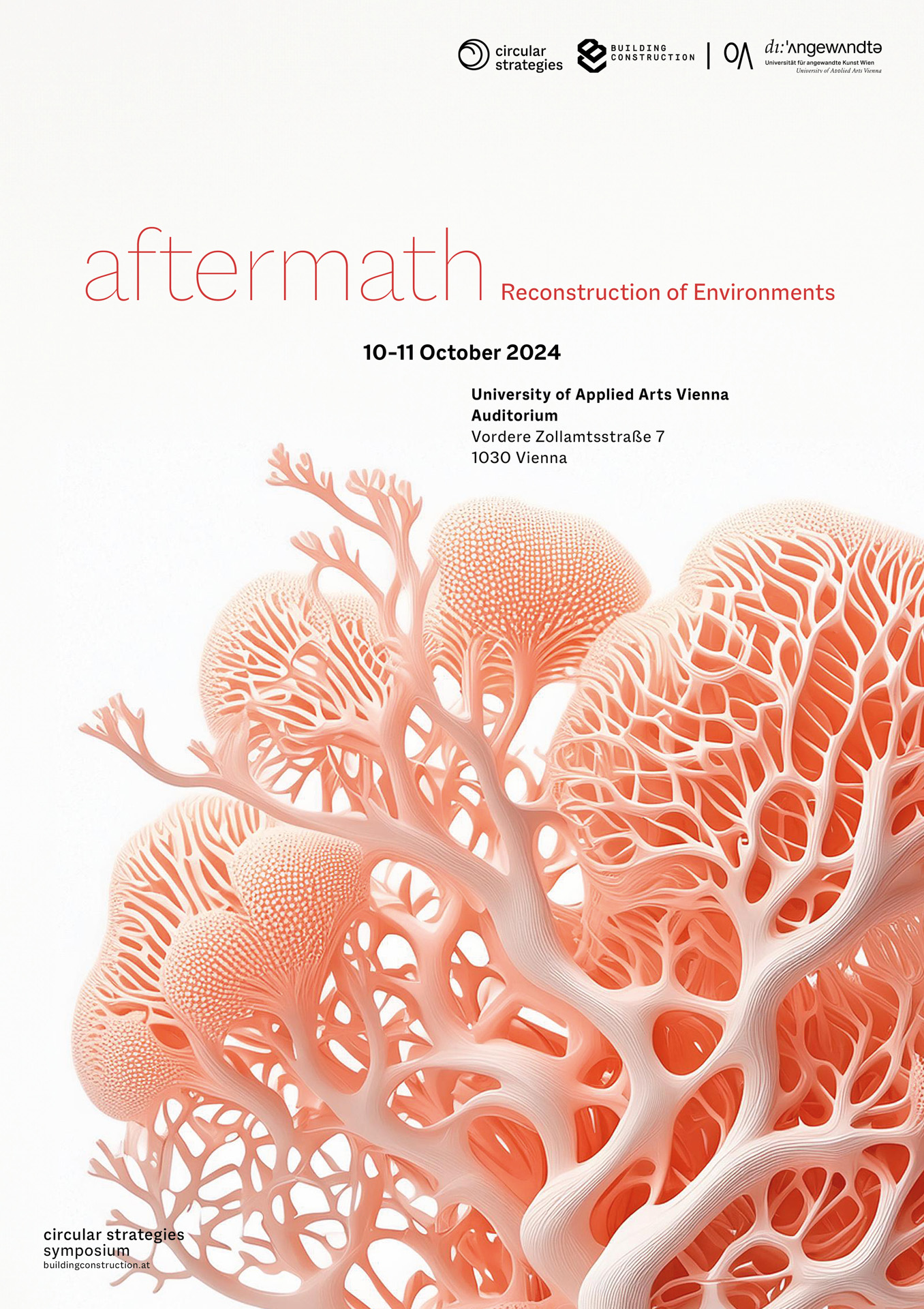
Aftermath. Reconstruction of Environments
The Fifth Circular Strategies Symposium addresses the timely, critical theme of post-disaster contexts.
10/10/2024 + 11/10/2024
Auditorium of the University of Applied Arts Vienna Vordere Zollamtsstraße 7, 1030 Vienna
Disasters, whether natural or manmade, leave a devastating trail of destruction in their wake, disrupting communities, livelihoods and ecosystems. In the aftermath of such events, the role of architects in addressing these challenges is essential not only in terms of restoring physical structures, but also in terms of fostering resilience and rebuilding communities. When a lack of economic and/or material resources is evident, a shift towards regenerative systems that minimize waste and maximize resource efficiency is required. The concept of circularity emerges as a respectful solution, offering a transformative approach to post-disaster architecture.
The symposium delivered a multidisciplinary perspective on key themes, such as designing with immediate responses in mind, from temporary to permanent rebuilding, large-scale territorial planning, materials and approaches, aimed at transforming the narrative from despair to resilience.
Organized by the Petra Gruber and Camille Breuil, Department of Building Construction, I oA, University of Applied Arts Vienna.
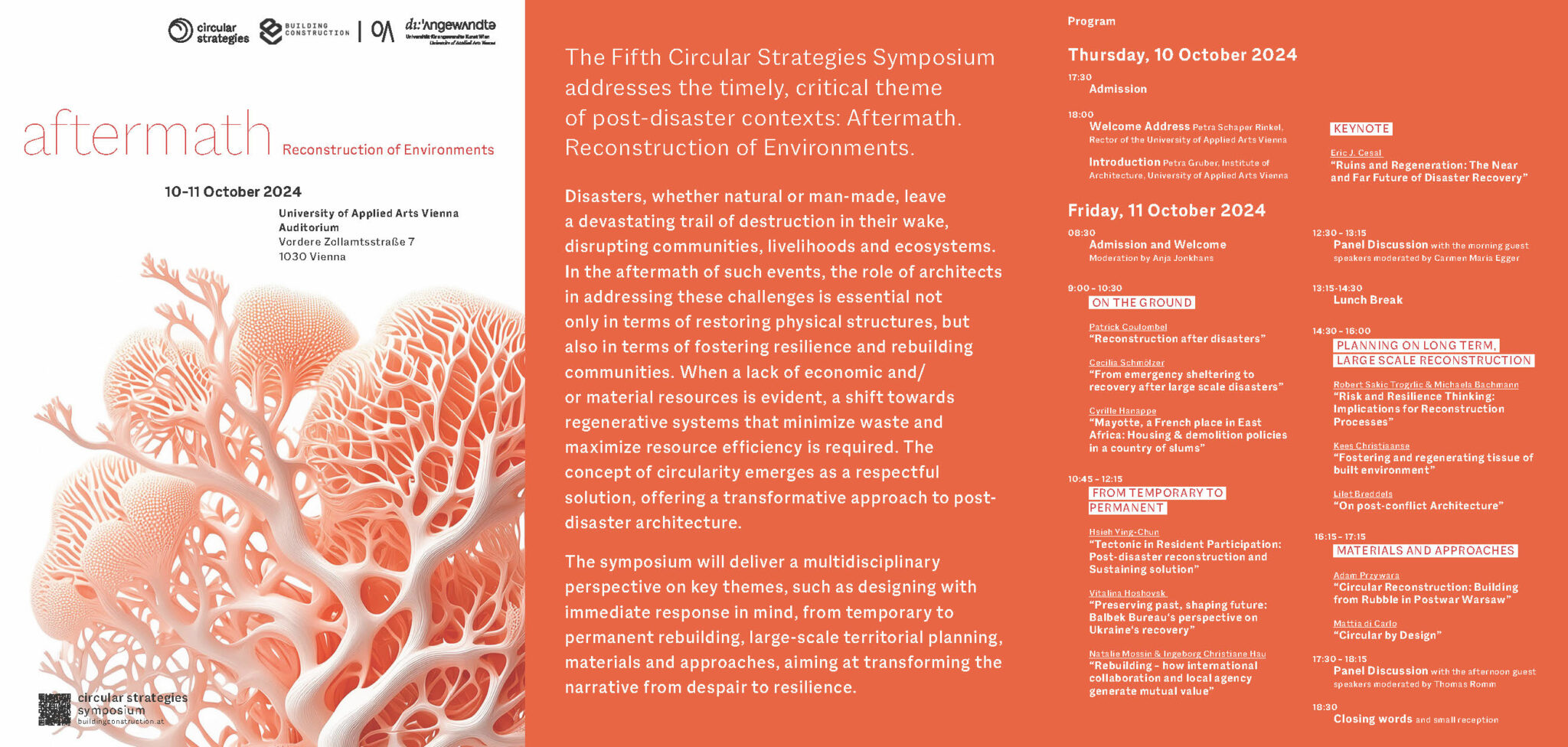
Thursday, October 10th 2024, 6pm
17:30 Admission
18:00 Welcome Address: Petra Schaper Rinkel, Rector of the University of Applied Arts Vienna.
Introduction: Petra Gruber, Institute of Architecture, University of Applied Arts Vienna
Keynote Ruins and Regeneration: The Near and Far Future of Disaster Recovery by Eric J. Cesal (Instructor, Harvard Global Development Program, community-based responses to disaster).
Friday, October 11th 2024, 9am-6.30pm
08:30 Admission and Welcome Moderation by Anja Jonkhans.
9:00 – 10:30 Block 01: ON THE GROUND
Patrick Coulombel (Emergency Architects Foundation, France), “Reconstruction after disasters”
Cecilia Schmölzer (Emergency Shelter and Reconstruction Expert), “From emergency sheltering to recovery after large scale disasters”
Cyrille Hanappe (Director “Architecture & Major Risks” ENSAPB, ENSA Paris Belleville, AIR Architecture, IPRAUS, France), “Mayotte, a French place in East Africa : Housing & demolition policies in a country of slums.”
10:30-10:45 Coffee break
10:45 – 12:15 Block 02: FROM TEMPORARY TO PERMANENT
Hsieh Ying-Chun (Atelier-3, Taiwan), “Tectonic in Resident Participation: Post-disaster reconstruction and Sustaining solution”
Vitalina Hoshovsk (Balbek Bureau, Ukraine), “Preserving past, shaping future: Balbek Bureau’s perspective on Ukraine’s recovery.”
Natalie Mossin & Ingeborg Christiane Hau (Head of Institute and Curator of the Royal Danish Academy, Denmark), “Rebuilding – how international collaboration and local agency generate mutual value”
12:15-12:30 Coffee break
12:30 – 13:15 Panel Discussion with the morning guest speakers moderated by Carmen Maria Egger.
13:15 -14:30 Lunch Break
14:30 – 16:00 Block 03: PLANNING ON LONG TERM, LARGE SCALE RECONSTRUCTION
Robert Sakic Trogrlic (IIASA, Austria), “Risk and Resilience Thinking: Implications for Reconstruction Processes”
Kees Christiaanse (President Swiss Network with Ukraine, ETH Zurich, KCAP, the Netherlands), “Fostering and regenerating tissue of built environment”.
Lilet Breddels (Director of Archis Amsterdam and project manager at Ro3kvit, urban coalition for Ukraine, the Netherlands), “On post-conflict Architecture”
16:00-16:15 Coffee break
16:15 – 17:15 Block 04: MATERIALS AND APPROACHES
Adam Przywara (Post-doctoral Researcher, University of Fribourg, Switzerland), “Circular Reconstruction: Building from Rubble in Postwar Warsaw”
Mattia di Carlo (Circular Expert, 3XN GXN, Denmark), “Circular by Design”
17:15-17:30 Coffee break
17:30 – 18:15 Panel Discussion with the afternoon guest speakers moderated by Thomas Romm.
18:30 Closing words by Camille Breuil and small reception.
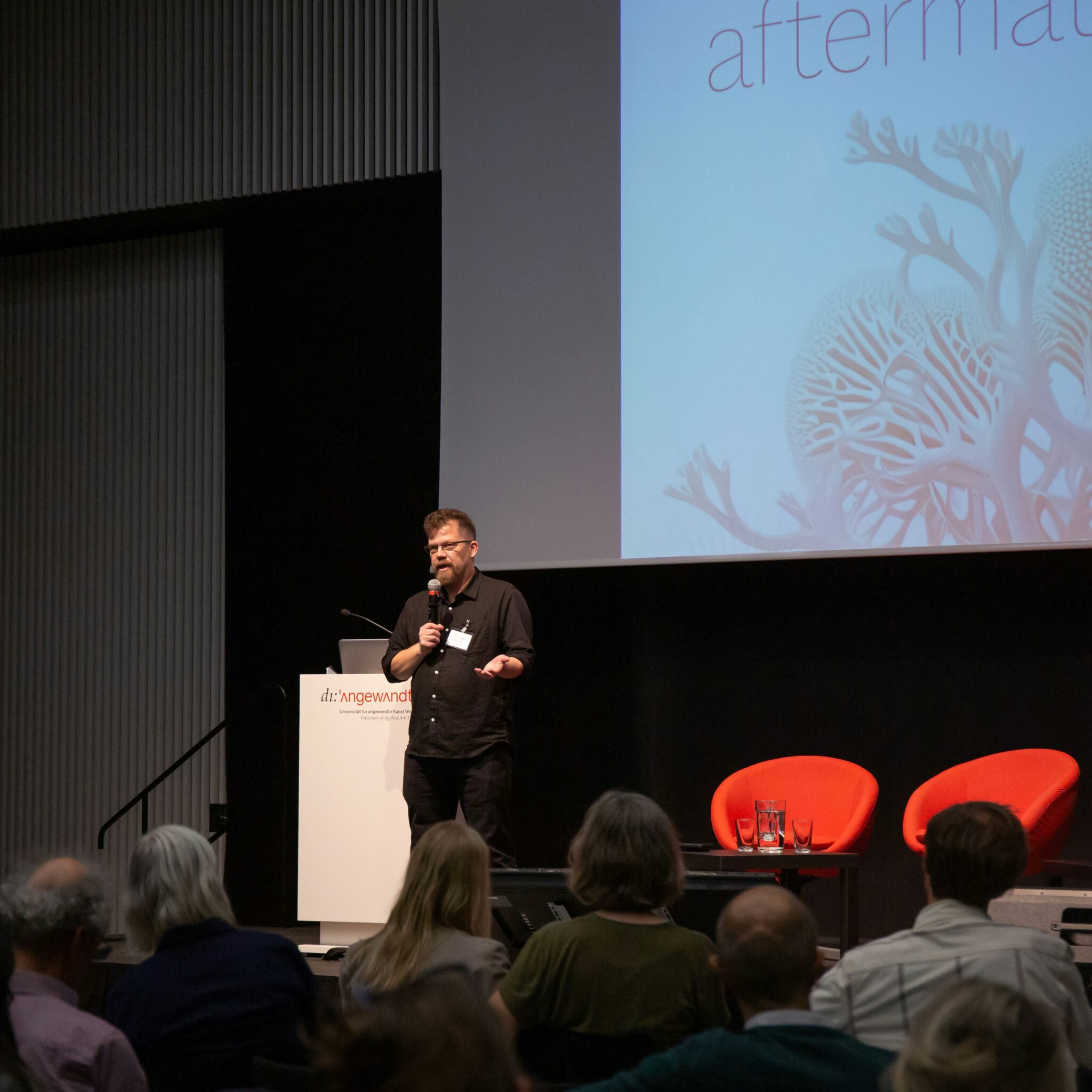
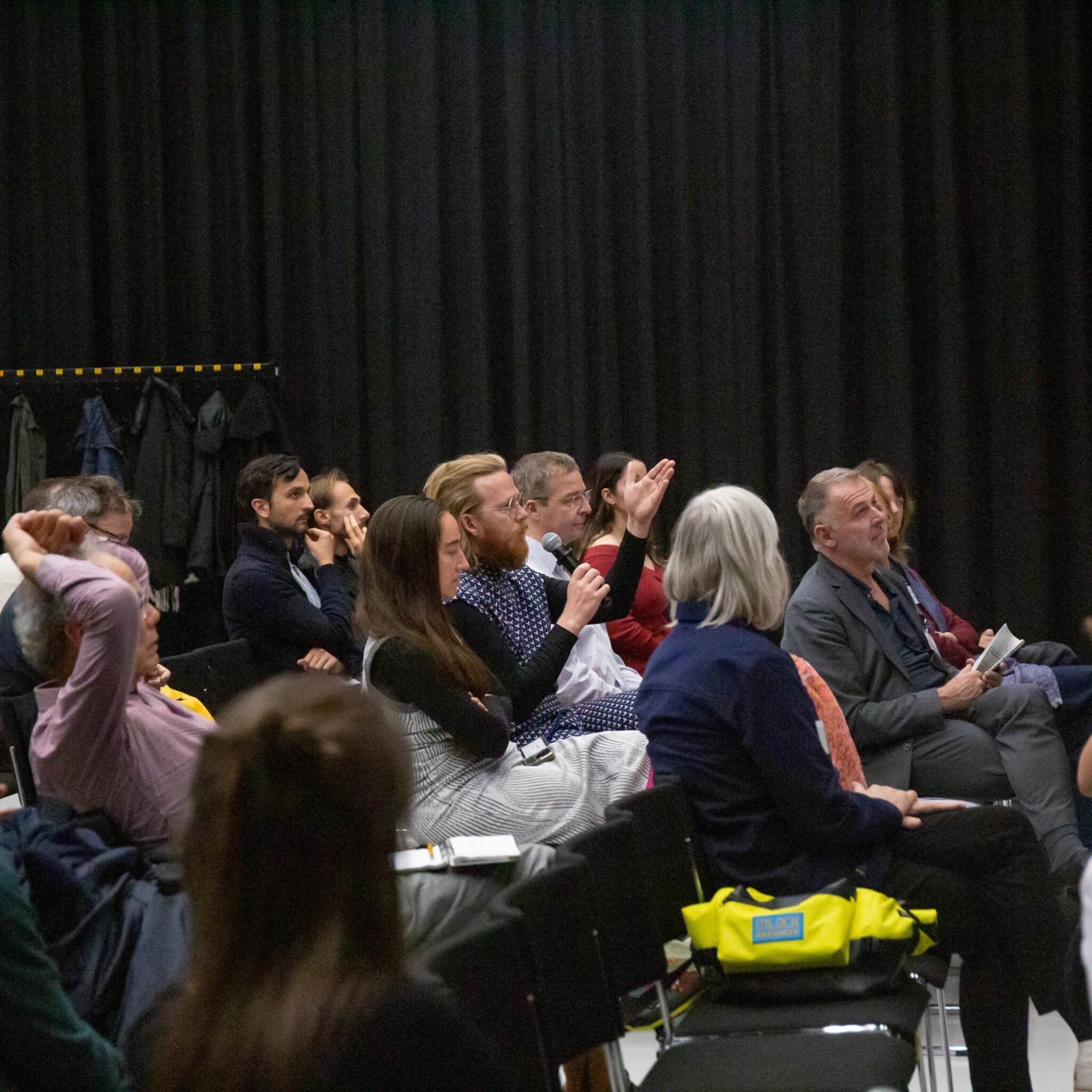
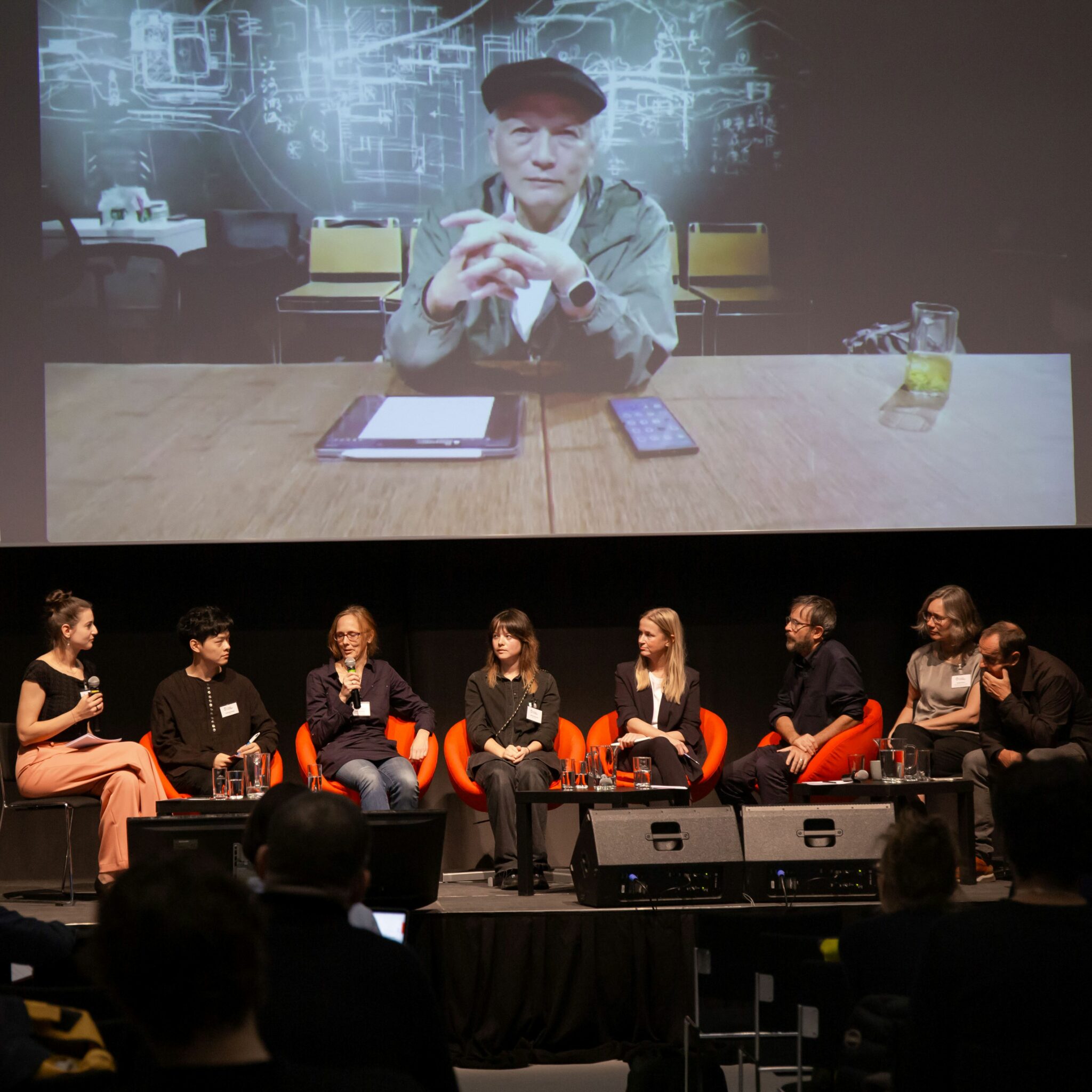
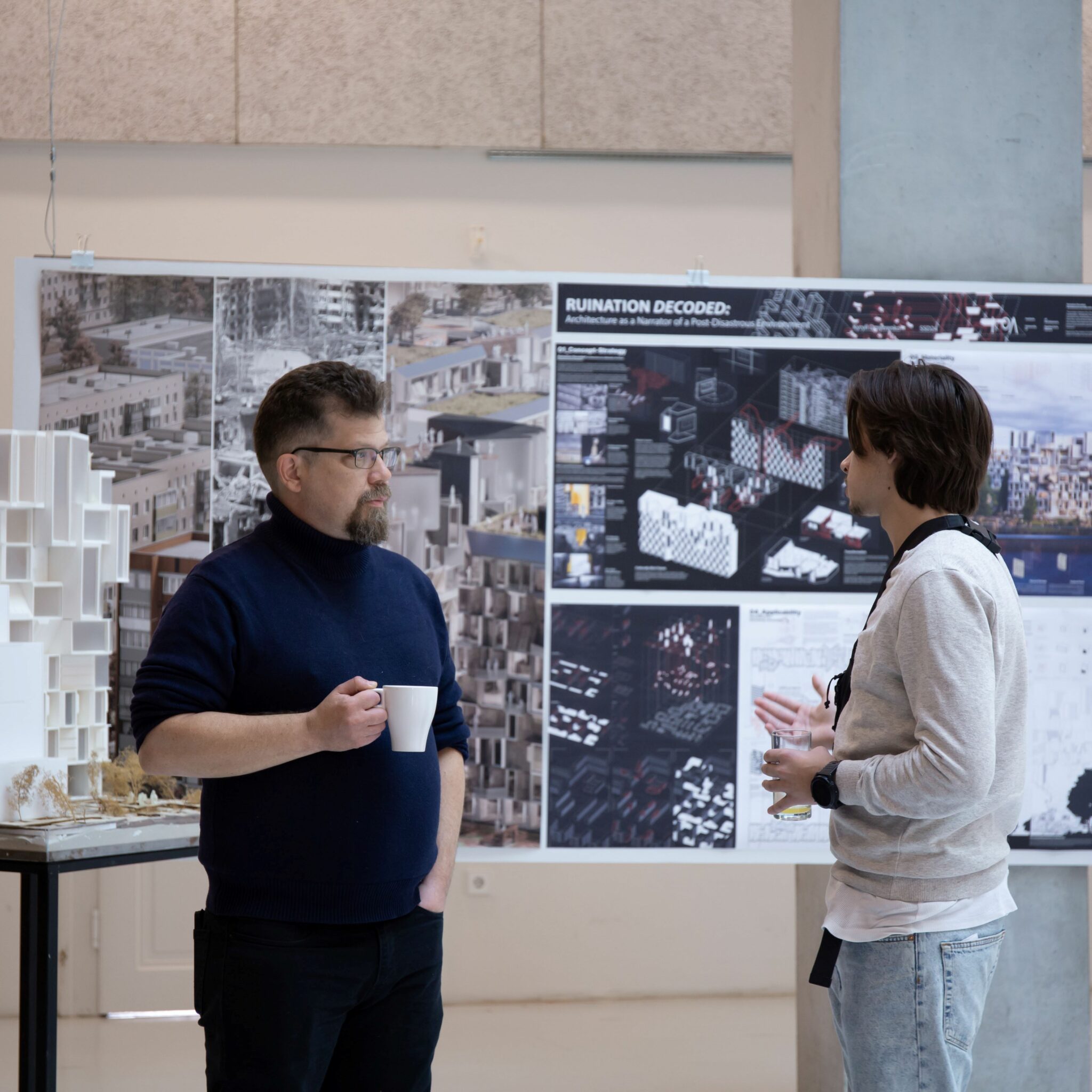
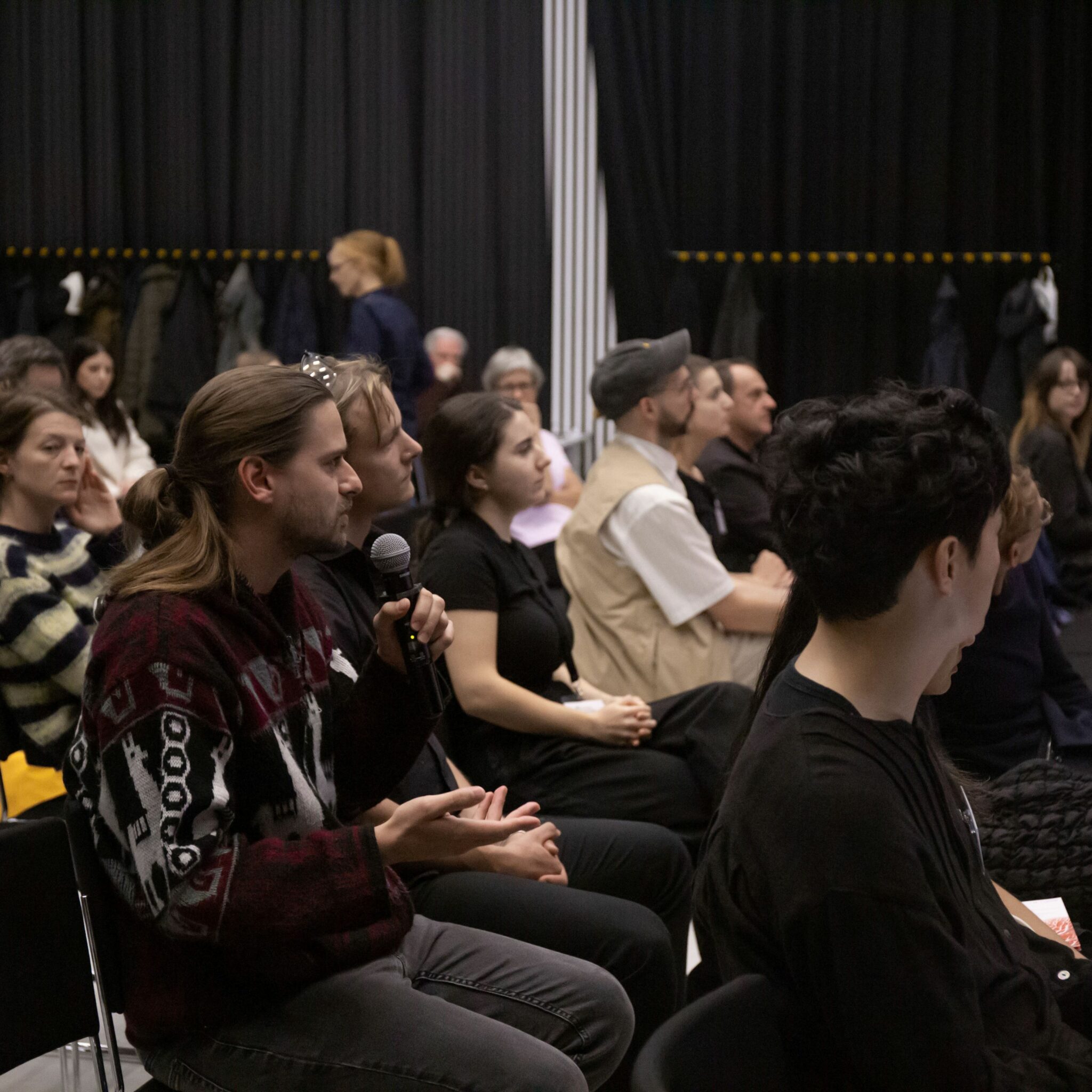
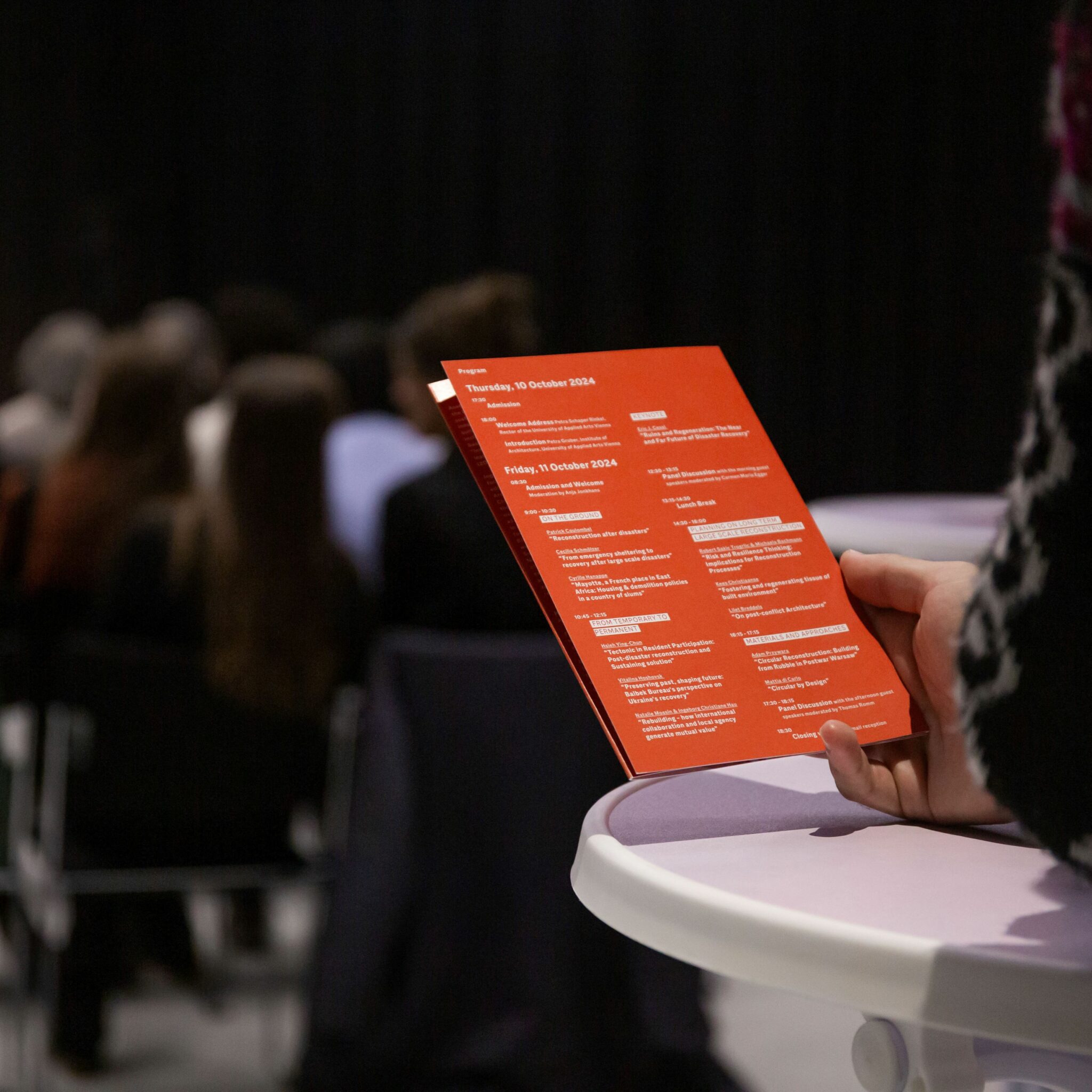
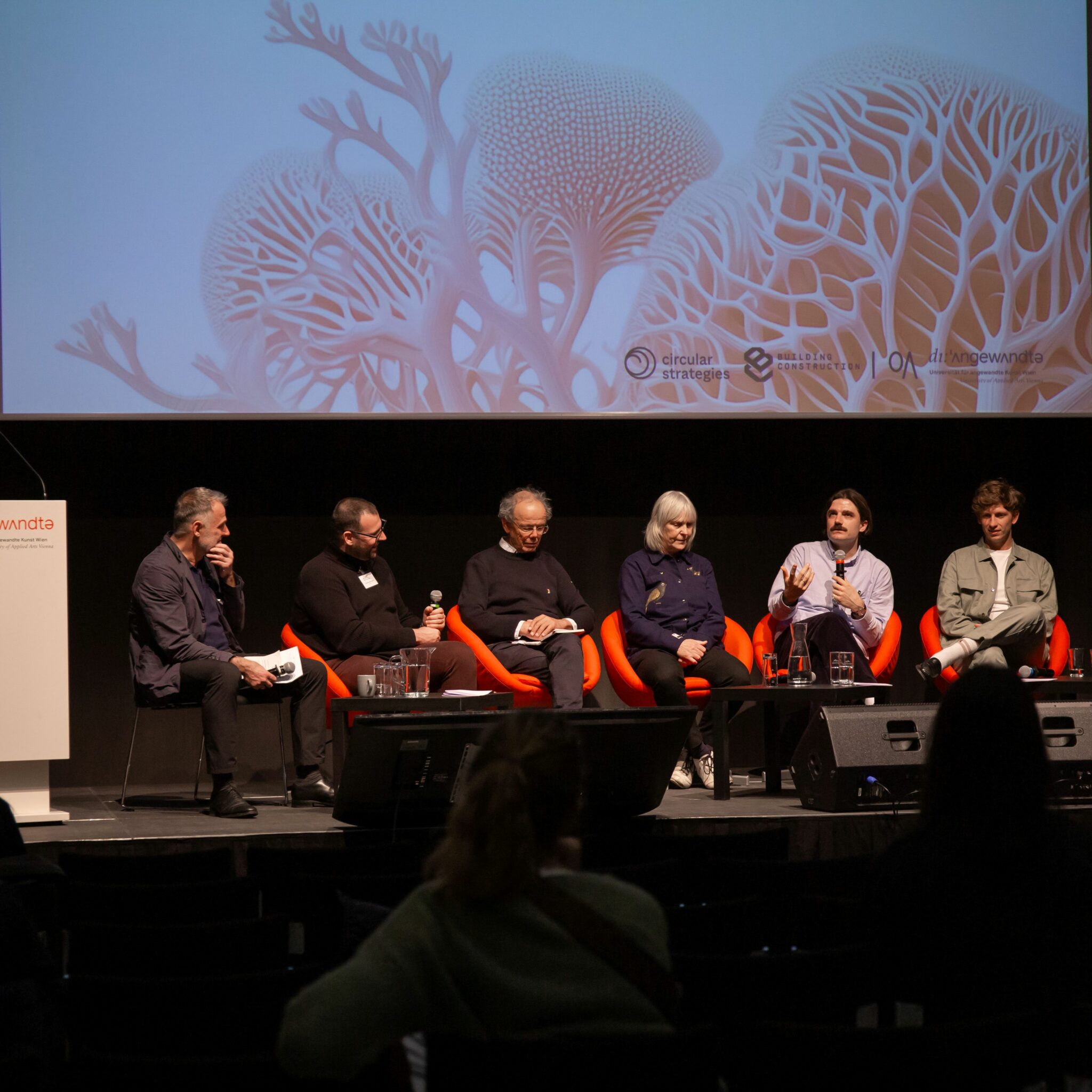
Image credits: Erfan Khosravi and Anna Okhrimenko.
Cultivating Matter. Is the future alive?
The sixth International Circular Strategies Symposium addresses the theme of cultivating matter and poses the question of aliveness of future architecture.
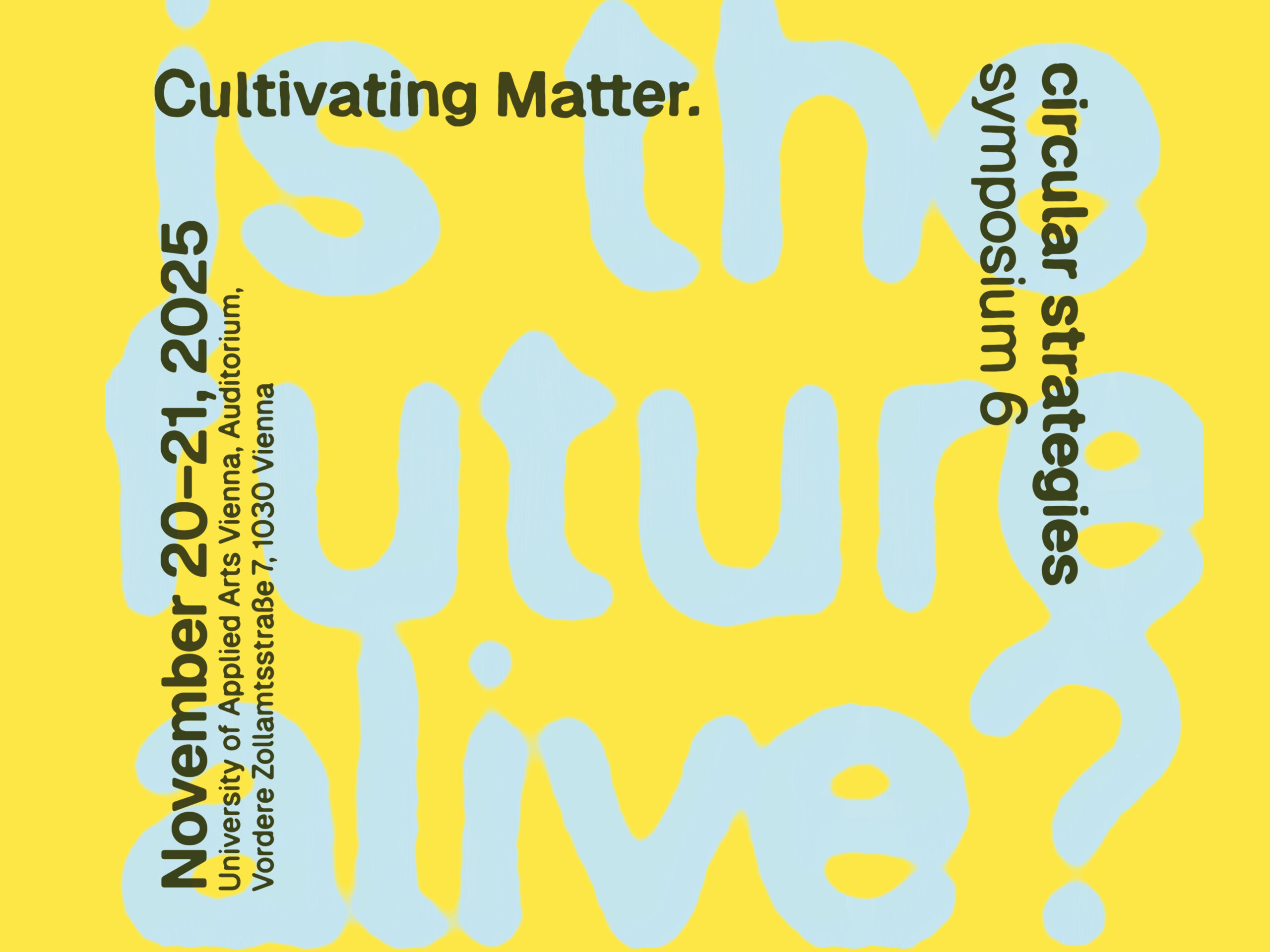
International Circular Strategies Symposium 6
November 20-21 2025, Vienna Austria.
Auditorium of the University of Applied Arts Vienna Vordere Zollamtsstraße 7, 1030 Vienna Austria.
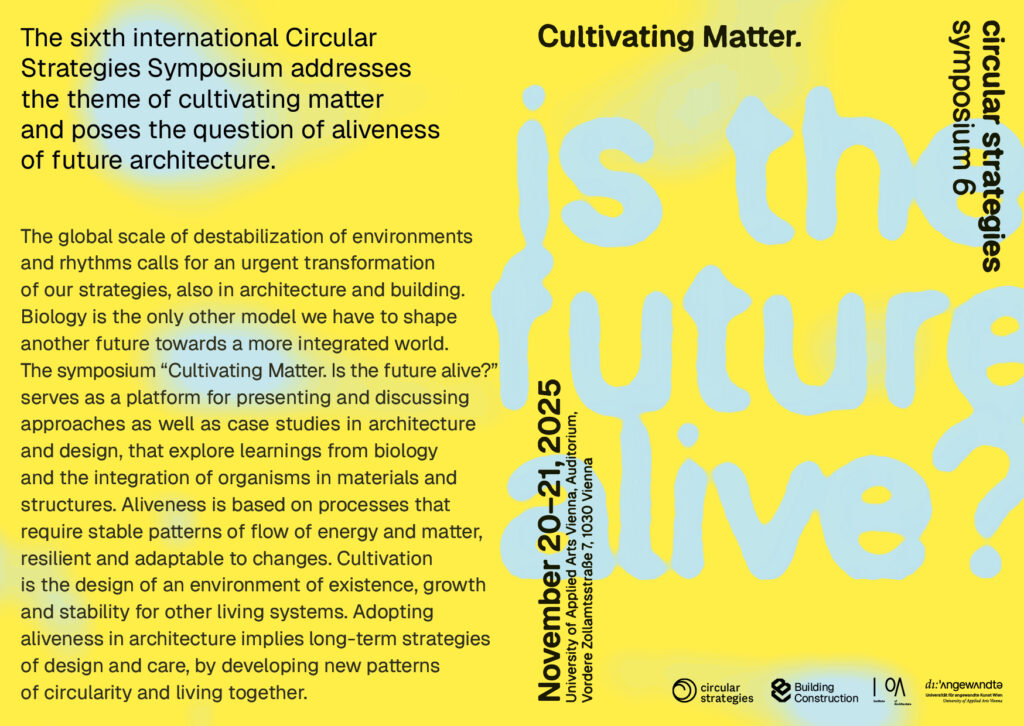
The sixth International Circular Strategies Symposium addresses the theme of cultivating matter and poses the question of aliveness of future architecture.
The global scale of destabilization of environments and rhythms calls for an urgent transformation of our strategies, also in architecture and building. Biology is the only other model we have to shape another future towards a more integrated world. The symposium “Cultivating Matter. Is the future alive?” serves as a platform for presenting and discussing approaches as well as case studies in architecture and design, that explore learnings from biology and the integration of organisms in materials and structures. Aliveness is based on processes that require stable patterns of flow of energy and matter, resilient and adaptable to changes. Cultivation is the design of an environment of existence, growth and stability for other living systems. Adopting aliveness in architecture implies long-term strategies of design and care, by developing new patterns of circularity and living together.
The event is organized by the Department of Building Construction, I oA, University of Applied Arts Vienna, Petra Gruber and Camille Breuil.
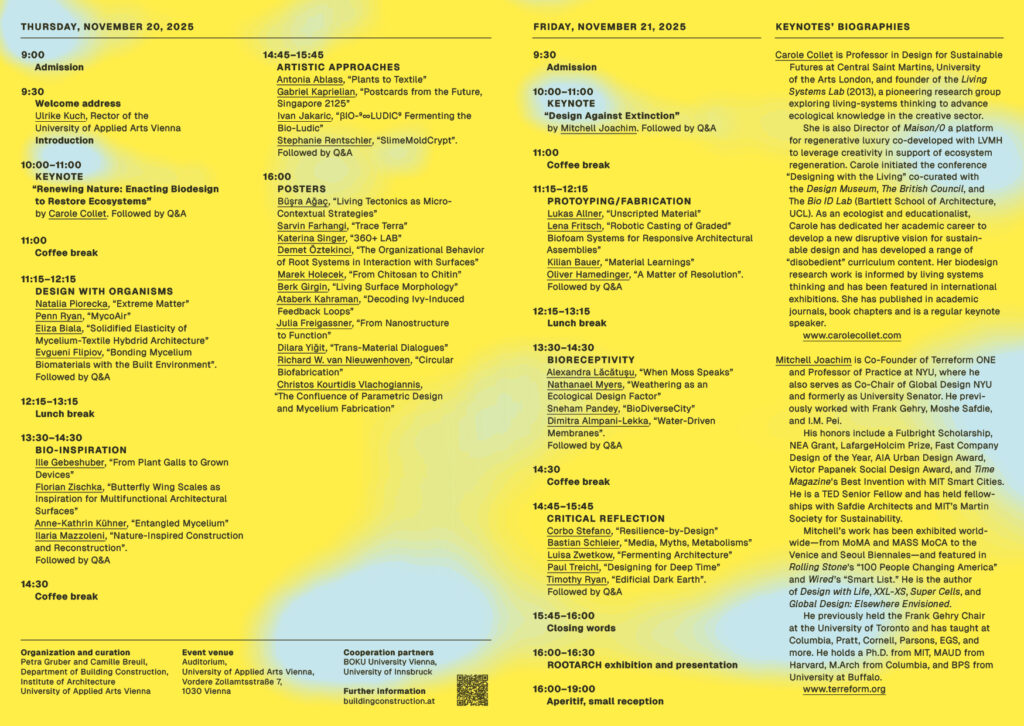
Event format:
The recording of the event will soon be available online on our Youtube Channel.
Thursday, November 20th 2025
09:00 Admission
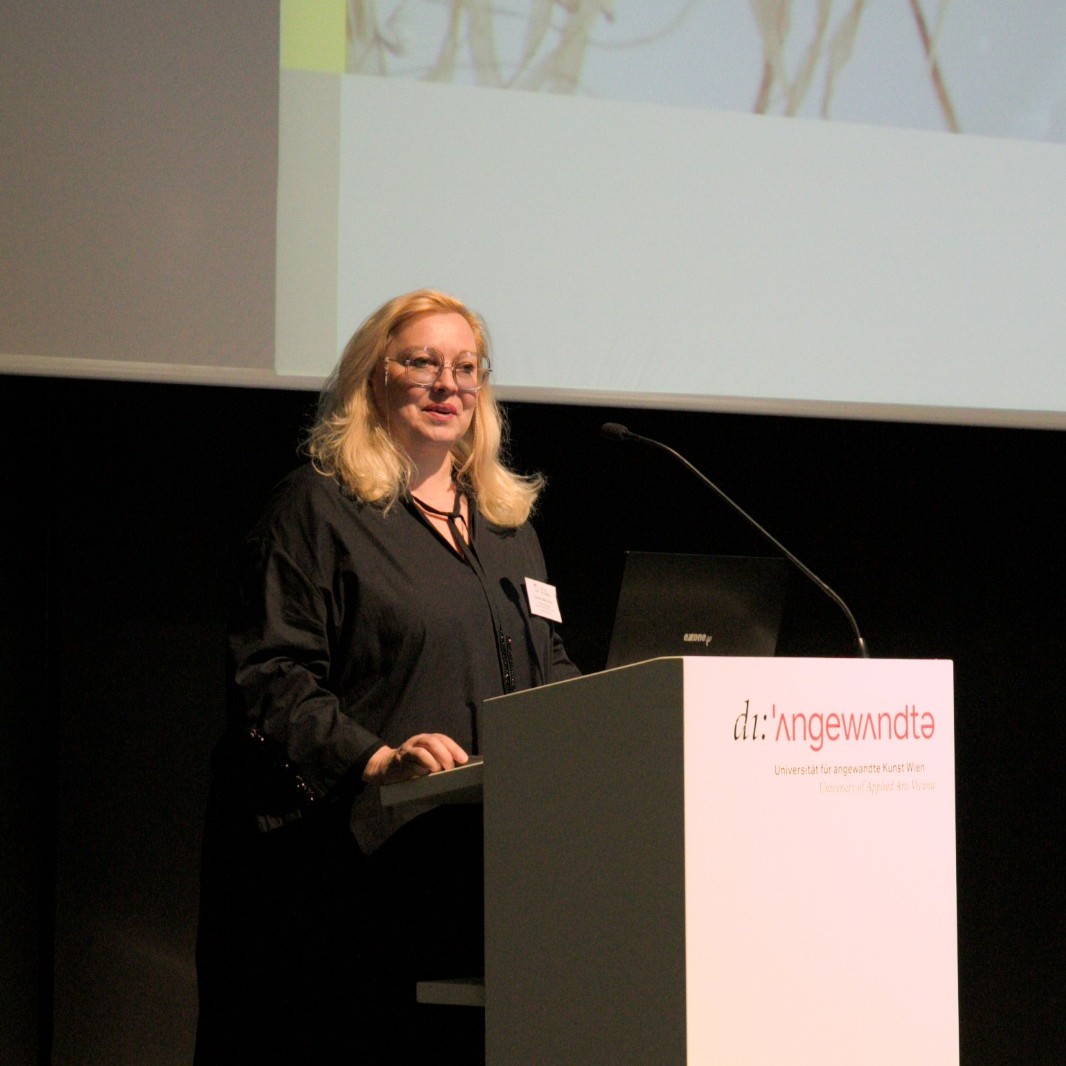
09:30 Welcome Address: Ulrike Kuch, Rector of the University of Applied Arts Vienna.
Introduction: Petra Gruber, Department of Building Construction, I oA, University of Applied Arts Vienna.
10:00 – 11:00 Keynote – Carole Collet, Renewing Nature: Enacting Biodesign to Restore Ecosystems. Moderation: Petra Gruber
11:00 – 11:15 Coffee Break
11:15 – 12:15 Session 1: Design with Organisms. Moderation: Anna Orbanić.
Natalia B. Piorecka, Henning Dörfler, Judith Ascher-Jenull, Barbara Imhof, Extreme Matter: Mycelium Composites Across Material Regimes;
Eliza Biala, Martin Ostermann, Solidified Elasticity of Mycelium-Textile Hybrid Architecture;
Evgueni Filipov, Ben Bridgens, Jane Scott, Bonding Mycelium Biomaterials with the Built Environment;
Anne-Kathrin Kühner, Eliza Biala, Martin Ostermann, Entangled Mycelium – Textile Logic for Grown Architecture
12:15 – 13:15 Lunch Break
13:30 – 14:30 Session 2: Bio-inspiration. Moderation: Helga Lichtenegger.
Ille C. Gebeshuber, From Plant Galls to Grown Devices: Toward Programmable Living Materials Inspired by Plant–Insect Interactions;
Florian Zischka, Matteo Corti, Cristian Manzoni, Harald W. Krenn, Ille C. Gebeshuber, Butterfly Wing Scales as Inspiration for Multifunctional Architectural Surfaces;
Ilaria Mazzoleni, Nature-Inspired Construction and Reconstruction: Biomimetic Solutions for Resilient Building Assemblies
Petra Gruber, Camille Breuil, Clemens Preisinger, Damjan Minovski, Andreas Körner, Rebekka Waters, Dominik Einfalt, ROOTARCH Plant Root Growth for Bioinspired Architectural Design
14:30 – 14:45 Coffee Break
14:45 – 15:45 Session 3: Artistic Approaches. Moderation: Ebba Fransén Waldhör.
Antonia Ablass, What Role Can Textiles Play in Greening Architecture?;
Gabriel Kaprielian, Postcards from the Future, Singapore 2125: From Garden City to City in Nature; – Ivan Jakaric, Margarete Jahrmann, βI⊙⁻⁹ ∞ LUDIC⁹ Fermenting the Bio-Ludic: Toward a Living Architecture of Symbiotic Play;
Stephanie Rentschler, SlimeMoldCrypt
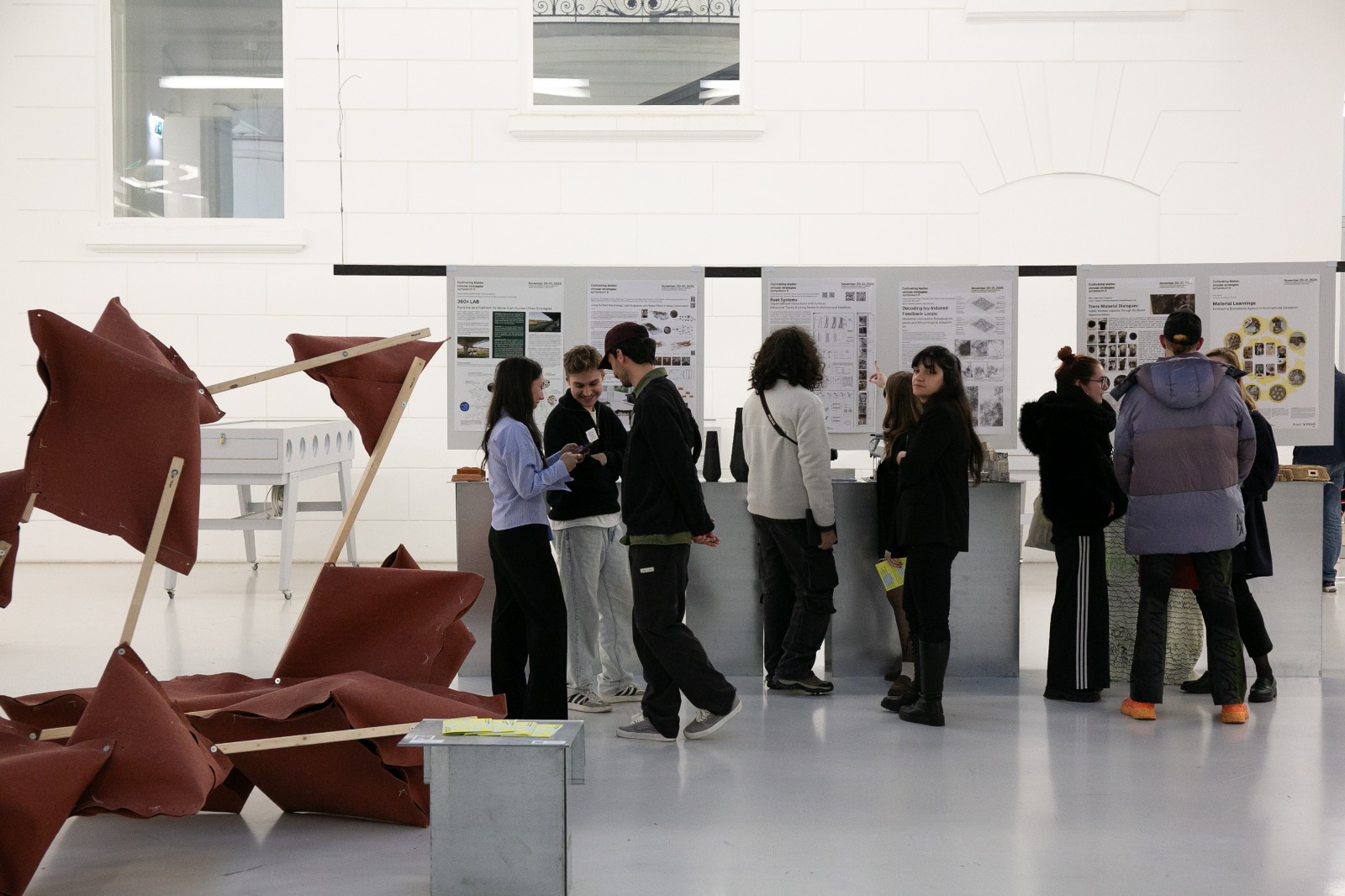
16:00 – 18:00 Posters. Moderation: Andreas Körner.
Büşra Ağaç, Fitnat Cimşit Koş, Living Tectonics as Micro-Contextual Strategies;
Sarvin Farhangi, James Lang, Trace Terra;
Demet Öztekinci, Muammer Gümüş, Zehra Delerel, Fitnat Cimşit Koş, The Organizational Behavior of Root Systems in Interaction with Surfaces;
Marek Holecek, Richard van Nieuwenhoven, Ilse Gebeshuber, From Chitosan to Chitin: Enabling Structural Biopolymer Transformation During Bioprinting
Kateřina Singer, Tamara Spalajković, Marek Hlavička, 360+ LAB: Planýrka as a Platform for More-than-Human Urban Strategies;
Berk Girgin, Sıla Özdoğan, Zeynep Özge Tepe, Fitnat Cimşit Koş, Seben Aşkın Kütükçü, Zehra Delerel, Oğuzhan Şenuysal, Betül Ozar, Living Surface Morphology; Light Exposure, and Water Effect in Moss Colonization;
Ataberk Kahraman, Fitnat Cimşit Koş, Zehra Delerel, Özgür Kavurmacıoğlu, Betül Ozar, Yusuf Çiftci, Decoding Ivy-Induced Feedback Loops: Modeling Cumulative Biological Impacts and Morphological Adaptation;
Julia Freigassner, Richard W. van Nieuwenhoven, Ille C. Gebeshuber, From Nanostructure to Function: Hierarchical Functional Structures in Chitin and Keratin;
Dilara Yiğit, Fitnat Cimşit Koş, Trans-Material Dialogues: Haptic Tectonic Inquiries Through Bio-Based Experimentation;
Richard W. van Nieuwenhoven, Nadja Kreitschitz, Manuel Reithofer, Stefan Heinl, Ille C. Gebeshuber, Circular Biofabrication: Bacterial Cellulose from Recycled Lab Waste as Structural Component for Culture Scaffolds;
Helene Romakin, Nora Mertes, About Radical Situatedness and Holistic Embodiment in More-Than-Human Processes;
Christos Kourtidis Vlachogiannis, Eftihis Efthimiou, Panayotis Pangalos, The Confluence of Parametric Design and Mycelium Fabrication
Friday, November 21st 2025
09:00 Admission
10:00 – 11:00 Keynote – Mitchell Joachim, Design Against Extinction. Moderation: Anja Jonkhans
11:00 – 11:15 Coffee Break
11:15 – 12:15 Session 4: Prototyping / Fabrication. Moderation: Viktória Sándor.
Gonzalo Vaíllo, Lukas Allner, Karolin Schmidbaur, Unscripted Material: Vulcanized Fiber and the Aliveness of the Industrially Manufactured in Architectural Practice;
Lena Fritsch, Graded Biofoam Systems for Responsive Architectural Assemblies Through Robotic Casting; Kilian Bauer, Material Learnings: Embracing Biomaterial Agency in Architectural Education;
Oliver Thomas Hamedinger, a matter of resolution: resolution of matter
12:15 – 13:15 Lunch Break
13:30 – 14:30 Session 5: Bioreceptivity. Moderation: Barbara Imhof.
Sneham Pandey, BioDiverseCity: Bioreceptive Surfaces for Urban Ecologies;
Alexandra Adelina Lăcătușu, Marcos Cruz, Brenda Parker, When Moss Speaks: Informing Bioreceptive Design Through Mapping Photosynthetic Behaviour of Epilithic Mosses;
Maria Jose Creuheras, Nathanael Myers, Farida Radwan, Weathering as an Ecological Design Factor: An Exploration into Biogeomorphic Interactions for Enhanced Weathering of Urban Stone Structures;
Dimitra Almpani-Lekka, Yannis Zavoleas, Water-Driven Membranes: Methods of Activating the Building Envelope for More-Than-Human Commoning
14:30 – 14:45 Coffee Break
14:45 – 15:45 Session 6: Critical Reflection. Moderation: Gonzalo Vaíllo. Presentations:
Stefano Corbo, Resilience-by-Design: Confronting the Environmental Crisis via Architecture;
Bastian Schleier, Meeting Salmon in Elevators: Fish, Infrastructure, and Ecological Imagination in the Northern Black Forest;
Luisa Zwetkow, Fermenting Architecture;
Paul J. J. Treichl, Designing for Deep Time: Regenerative Longevity through Multispecies-Maintenance;
Timothy Ryan, Edifical Dark Earth: Microbially Inoculated Carbonaceous Architectures
15:45 – 16:00 Closing Words by Camille Breuil
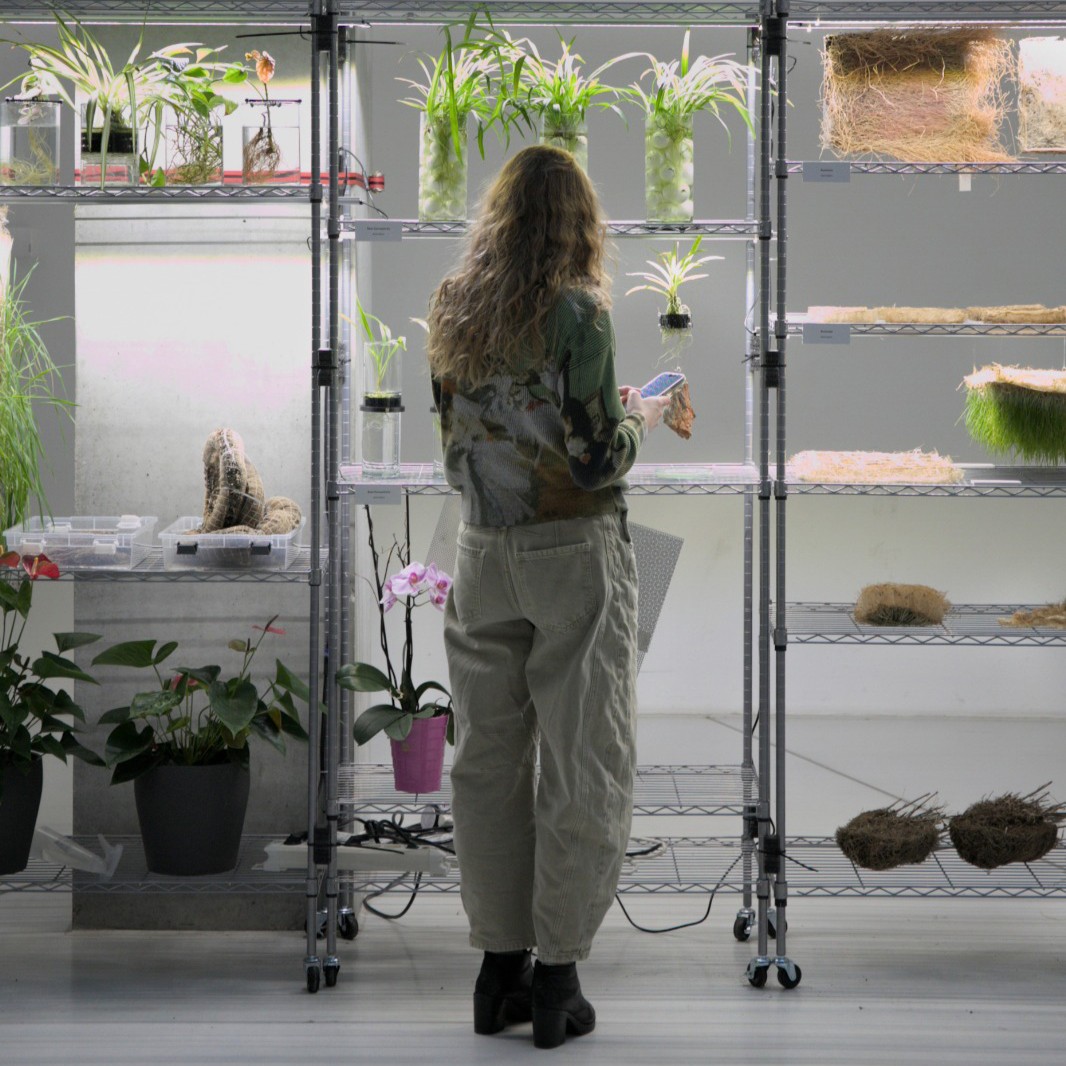
16:00 – 16:30 ROOTARCH Exhibition introduced by Camille Breuil
Scientific Committee:
- Ebba Fransen-Waldhör (University of Applied Arts Vienna, Austria)
- Wolfgang Gindl (BOKU University Vienna, Austria)
- Petra Gruber (University of Applied Arts Vienna, Austria)
- Barbara Imhof (University of Innsbruck, Liqiufer Systems Group, Austria)
- Margarete Jahrmann (University of Applied Arts Vienna, Austria)
- Andreas Körner (University of Applied Arts Vienna, University of Innsbruck, Austria, University College London, UK)
- Helga Lichtenegger (BOKU University Vienna, Austria)
- Clemens Preisinger (University of Applied Arts Vienna, Austria)
- Layla van Ellen (University of Innsbruck, Austria)
Cooperation Partners:
BOKU University Vienna, University of Innsbruck
Contact: circularstrategies@uni-ak.ac.at